
Here we discuss the effects of hostilities between regimes when it comes to carbon based forms of energy, think of oil. One takes over the other, with the goal of acquiring all production facilities.
For this article we assume the following standard effects: All-round price increases for all form of energy, price increases in shipping (insurance mostly from increased uncertainty, plus fuel charges), general inflation for common folk as all produced goods need transport and electricity at several points during production.
We are assuming that all forms of energy are fossil, which is not realistic but still how the world work early 2026. Sustainable alternatives are widely available and generally cheaper; they are not the standard due to lobbyist and other vested interests.
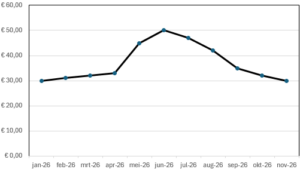
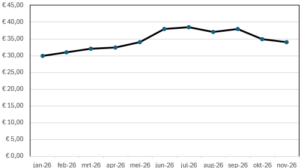
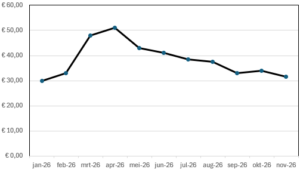
The charts can be seen as a global oil price chart (general market price, not for any party in particular). All prices start at the exact same price point, because that is before any of the here discussed takes place.
Scenario 1: You are also a net producer
In this case you have relatively little to fear, as prices increase so do your profits. It partially depends on the motivation for the hostilities; if they are unrelated, then the price increase should be short lived. If you wanted to hurt the competition then there are a few scenarios:
1 Your goal is to secure even more supply, potentially via local contracts. This should reduce your people`s prices on the mid to long term as supply is more secure. Prices could be kept relatively high, but markets will not react to the same degree as they would normally to new events, leading to a more stable price. An internal mechanism, of transferring fuel without third party interference should supply all internal needs at cost, possibly at a token price for private and corporate parties alike, financed by exporting excess capacity.
2 It is your goal to keep prices at a high level for profit. Perfectly possible as you now control more supply. Something to consider; if prices are high, others tend to increase their production, which reduces prices, so you need to decide what to do about that in advance.
3 You attacked someone for the goal of controlling their assets, which you intend to use as a means to control the market. All effects fully depend on what you do with that control, though a price increase is very likely.
It is possible to share the gains with your closest allies, assuming they supported your actions and possibly participated in them. Failure to do so to any extent might result in a negative sentiment. This does not matter greatly as your superior energy price is its own reward and a sufficient reason (lower cost of products made by you and access to your fossil fuels) for them to continue having a positive relationship with you.
Below chart showcases a possible scenario: At first prices spike, but you are able to correct this by increasing output. A part of the price increase is simple reactionary shock of the market, a temporary effect. You were selling oil at the start and are selling even more at the end, but total supply does not have to change, nor does demand need be different. So we end at the exact same price as we start.
Scenario 2: You are a net producer, but import as needed
This scenario assumes a more specialised role, of a country that does have its own oil and industry, just not enough to supply everyone with every variation.
Orchestrating a conflict with a much bigger producer should be positive, at first, as your production capacities increase in value. The net increase in energy price should reduce usage globally, including your own, increasing possibilities for export, at an increased price. In the longer term, your more specialised needs will require import, still at a higher price (stabilisation could have taken place in the mean time, reducing import costs). As such a net benefit depends on the actual profit and cost of the situation.
We are assuming that you still have to import some, as specialised needs require a lot of different production facilities that might not all be present in the acquired territories.
One thing is certain: Your allies and trade partners are unlikely to be very thankful, so that might offset any economic gains.
This chart displays a possible fossil fuel trajectory of this scenario: Some price changes as people react, but overall not a big move as you are both an importer and an exporter, depending one the specific product. A net price increase is very possible; you are now able to produce that which you first bought, increasing your control of the market. Normally a reduction in buyers leads to a lower price, but supply also plays a role and you acquired that, thereby reducing overall supply and increasing prices on the longer term.
Scenario 3: You are a net importer
Absolutely not a good idea! If you are reliant on fossil fuel, produced by someone other than yourself, it is always expensive to rock that particular boat. It will result in a huge cost for your citizens, it is possible that other producers feel threatened and decide to cut you off completely while they still can. In such a scenario you would be forced to end the conflict as the big loser.
A different take on above, is when other producers decide not to reduce their shipments, and you manage to become a producer by acquiring the facilities of the other party in the conflict. Now you no longer have to import as much, possibly export some.
We also have a chart for this scenario: As you were an importer (assuming the acquisition was succesful and sufficient to provide all own needs), and have now become an exporter of fossil fuel. As your importing became an internal matter, demand has fallen. Export has also decreased (by what you import, presumably not the full capacity of the other party), resulting in a net demand effect.
Effects for regular people
At first it will just be another price increase, depending on how long and wide spread the effects are; it is possible that this will inspire a group to move towards electric form of transportation.
Before doing so, there will be calls for a cap gas prices (predominantly for fuel for automobiles and heating in houses), which politician will debate about before setting a high cap, that they suspect will not be met for very long. If they set a realistic cap, lending or cutting expenses is required, both of which are unpopular with voters so they try to avoid this.
As the three scenarios inform: Going from importing to exporting is difficult, but can reduce dependency and be positive for you, without creating a big effect on the long run for the world in general. Whilst adding to your internal production facilities would likely result in net benefits for you, but at the risk of damaging economic relations, which possibly offsets any gains from cheaper production costs. Simply adding to your already excess production doesn`t necessarily affect general prices, it simply gives you a bigger piece of the pie; you might not get more raw materials out, nor do you need them; everything goes straight to market. So there is no real change.